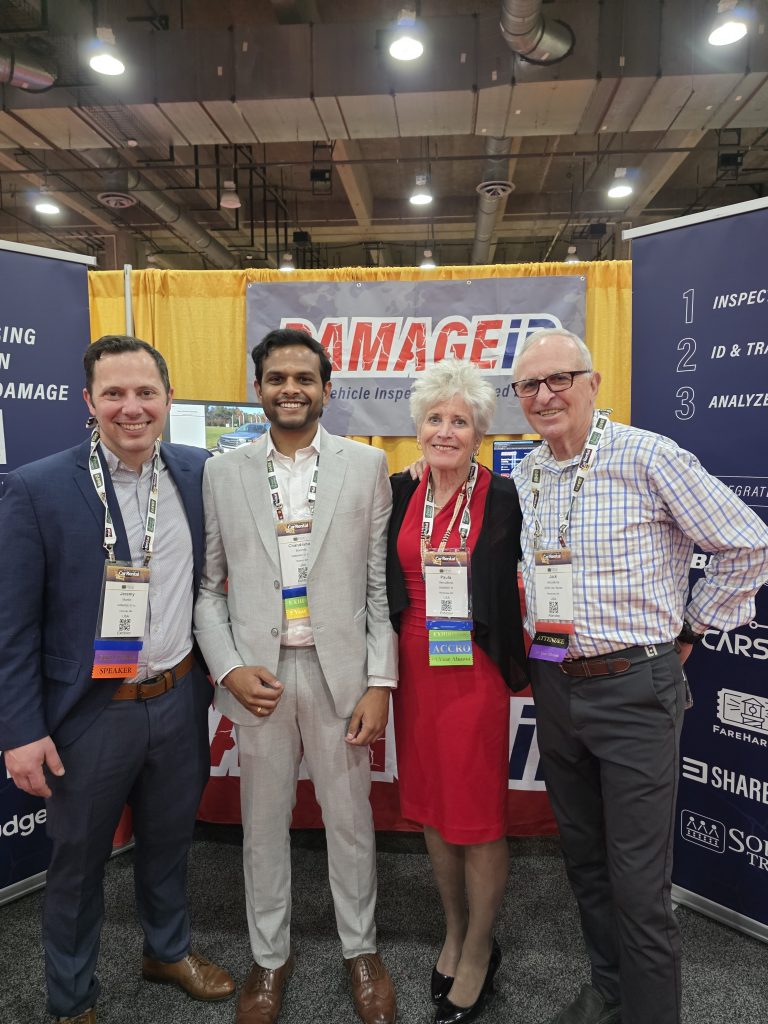
At this year’s International Car Rental Show, DAMAGE iD Business Development Manager Jeremy Martin shared an important perspective on one of the most talked-about topics in the rental industry: vehicle damage detection and customer trust.
As technology continues to advance, rental companies have more tools than ever to document vehicle condition, identify damage, and streamline operations. But according to Jeremy, technology alone is not what determines whether customers trust the process.
The real factor is transparency.
The Problem Is Not Always the Technology
When customers feel frustrated about damage charges, the conversation often turns to technology.
Was the damage detection accurate?
Did the software identify something incorrectly?
Was AI involved?
While those questions matter, Jeremy pointed out that many disputes originate somewhere else entirely.
“If a customer feels like they’re being nickel and dimed, that often comes back to transparency,” he explained.
In many cases, the issue is not the technology. It is the process surrounding it.
Questions such as:
- What are the billing thresholds?
- How much damage qualifies for a charge?
- How long does a customer have to dispute a claim?
- Were those policies clearly communicated?
If customers do not understand the rules from the beginning, confusion and frustration become much more likely.
Technology Should Support the Process
One of the most important points Jeremy raised was that technology should enhance an organization’s existing process, not replace it.
Vehicle inspection platforms, AI-assisted damage detection, and digital documentation tools can help businesses create more consistent records and improve operational efficiency.
However, those tools are most effective when paired with clear policies and transparent communication.
Technology can identify damage.
Technology can document vehicle condition.
Technology can provide evidence.
But technology cannot replace trust.
Trust comes from having a process that customers understand and employees follow consistently.
When Damage Detection Becomes a Profit Center
Jeremy also addressed a growing concern within the industry.
Organizations can run into problems when they begin treating damage detection as a profit center rather than a tool for protecting assets.
The purpose of vehicle inspections should be to document vehicle condition accurately and fairly.
The goal should be accountability and transparency.
When customers believe that every scratch, scuff, or minor imperfection is being used as an opportunity to generate revenue, trust begins to erode.
That is where businesses risk damaging long-term customer relationships.
Documentation Creates Confidence
Strong documentation benefits everyone involved.
Customers gain confidence that charges are supported by evidence.
Employees have clear records to reference.
Managers can resolve questions more efficiently.
Operations become more consistent.
Digital inspections and AI-supported workflows play an important role in creating that documentation, but the process behind them remains just as important.
The Future of Vehicle Inspections
As AI and digital inspection technologies continue to evolve, the most successful organizations will likely be those that combine innovation with transparency.
Customers increasingly expect:
- Clear communication
- Consistent processes
- Accurate documentation
- Fair treatment
Technology helps deliver those outcomes, but only when it is used to support a customer-focused process.
Final Thoughts
Jeremy’s message at the International Car Rental Show was simple but important.
The future of vehicle inspections is not just about better technology.
It is about using technology to create better experiences.
Transparency, consistency, and accountability remain the foundation of trust.
When those elements are in place, technology becomes a powerful tool for improving operations while strengthening customer relationships.