Fleet operators and rental agencies have always faced the same challenge. When damage appears on a vehicle, determining when it happened and who is responsible can quickly become complicated.
For years, many companies relied on manual walkaround inspections and handwritten notes. While these methods worked to some degree, they often left room for disagreement and uncertainty.
Today, technology is changing that process. Digital inspections and artificial intelligence are reshaping how fleets document vehicle condition and manage accountability.
A Shift Toward AI Driven Inspections
One of the most significant trends in fleet management today is the growing use of artificial intelligence to support inspection processes.
Traditional inspections rely heavily on human judgment. Employees may miss small scratches, overlook dents, or document damage inconsistently. In busy environments where vehicles move quickly in and out of service, those inconsistencies can lead to disputes.
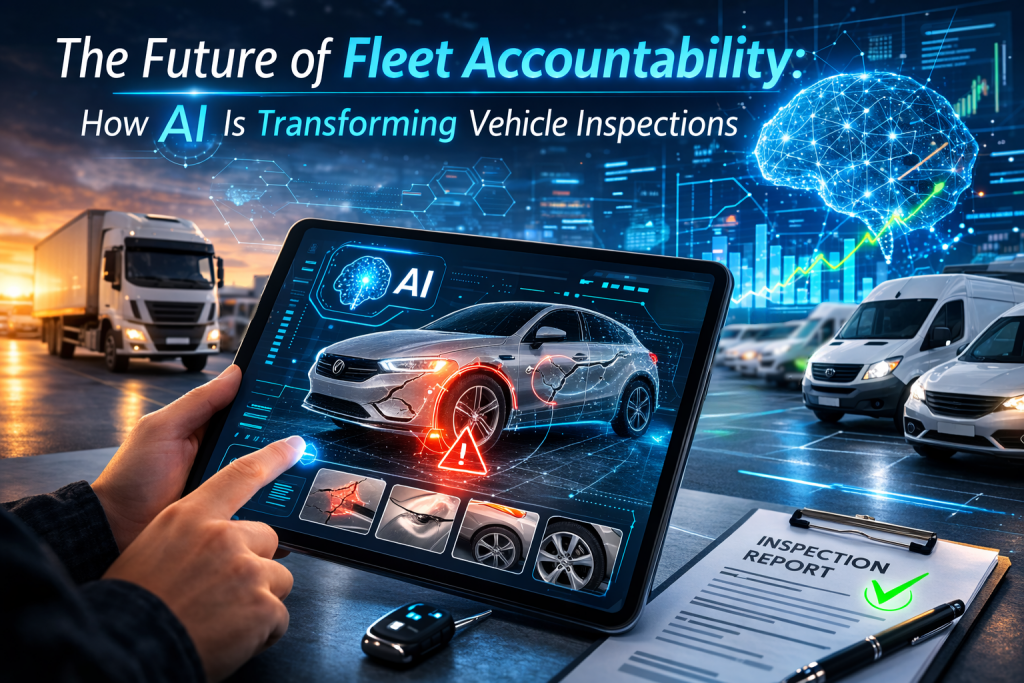
AI assisted inspection tools help address this problem by analyzing images and identifying potential damage automatically. This technology improves consistency and helps ensure that small issues are documented before they become larger problems.
By combining human review with automated detection, fleets can create a more reliable inspection process.
The Importance of Clear Documentation
At the core of fleet accountability is documentation.
When a vehicle leaves a lot or returns from use, companies need a clear record of its condition. Without that record, determining responsibility for damage becomes difficult.
Digital inspection platforms provide time stamped photos, structured inspection reports, and side by side comparisons between previous and current inspections. These records create a reliable timeline of vehicle condition.
Instead of relying on memory or incomplete notes, operators can reference visual documentation that shows exactly what the vehicle looked like at each stage of use.
This level of transparency helps reduce disputes and speeds up damage resolution.
Meeting the Needs of Modern Fleet Operations
Fleet operations today are more complex than ever. Vehicles may be shared among multiple drivers, rotated between locations, or returned outside of normal business hours.
These operational realities require inspection systems that are both fast and flexible.
Digital inspection tools now support workflows where employees or customers can complete inspections directly from a mobile device. Some systems even allow customers to complete inspections through guided links without downloading an application.
This approach allows fleets to maintain documentation even during after hours returns or remote transactions.
Expanding Beyond Traditional Vehicle Rentals
While rental car agencies were among the first to adopt digital inspection technology, the demand has expanded into other industries.
Businesses that rent or share equipment face many of the same challenges when it comes to documenting condition and resolving disputes.
Companies that manage vans, trucks, boats, recreational vehicles, and other shared equipment have discovered the same need for reliable documentation. As more industries recognize the value of visual inspection records, digital inspection tools are becoming an essential part of asset management.
A Technology Driven Future
As artificial intelligence continues to improve, its role in vehicle inspections will likely expand.
Future systems will be able to detect smaller types of damage, compare inspection histories more accurately, and provide faster insights to fleet managers.
For operators, this means less time spent investigating disputes and more confidence in the accuracy of their inspection records.
The goal is not to replace human inspections but to support them with tools that increase consistency and reliability.
Moving Toward Smarter Fleet Protection
The fleets that succeed in the coming years will be the ones that embrace technology to improve accountability and efficiency.
Digital inspections and AI powered damage detection are helping companies create clear, defensible documentation for every vehicle interaction.
By combining human oversight with intelligent tools, fleets can protect their assets, reduce disputes, and maintain trust with customers.
As the industry continues to evolve, solutions that bring clarity and transparency to the inspection process will play an increasingly important role in modern fleet operations.
We Want Your Perspective
AI powered inspections are quickly becoming part of modern fleet management.
• Is your organization currently using digital inspections?
• Have you explored AI assisted damage detection tools?
• What would make vehicle inspections faster or more reliable for your team?
Your experience can help other fleet operators improve their inspection process.