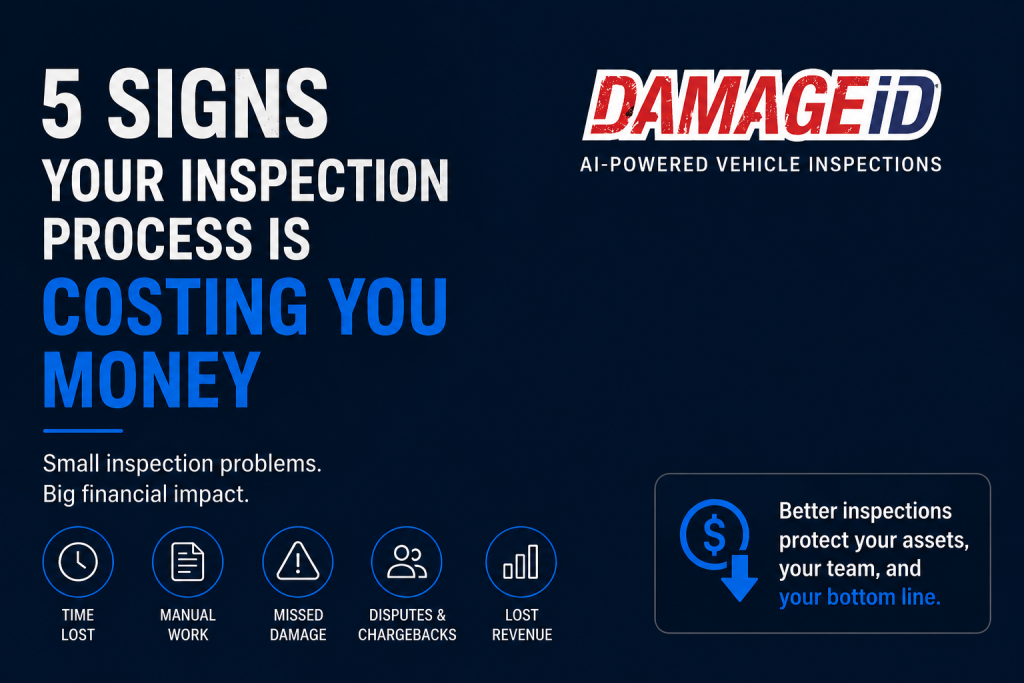
At DAMAGE iD, we spend a lot of time talking with fleet operators, rental companies, and Amazon DSP owners about inspections.
What we hear most often is not just frustration about damage itself. It is frustration about the process surrounding it.
Missed documentation. Slow check-ins. Disputes that drag on longer than they should. Teams wasting time hunting down photos or trying to remember when damage actually occurred.
Most businesses do not realize how much money small inspection inefficiencies are quietly costing them every month.
The reality is that inspections impact far more than vehicle condition. They affect revenue, labor, turnaround time, accountability, and customer experience.
1. Damage Keeps Getting Found Too Late
One of the biggest warning signs is when damage is regularly discovered hours or days after a vehicle changes hands.
This happens more often than many teams admit.
A rushed check-in during a busy shift. Poor lighting. Missing photos. Inconsistent walkthroughs between employees.
By the time the damage is noticed, it becomes difficult to determine:
- When it happened
- Who was responsible
- Whether the cost can realistically be recovered
At DAMAGE iD, we consistently hear from fleets that late damage discovery creates unnecessary disputes and absorbed repair costs that could have been avoided with better documentation upfront.
2. Your Team Is Spending More Time Managing Inspections Than Completing Them
A lot of fleets are still juggling:
- Paper forms
- Texted photos
- Shared folders
- Manual uploads
- Separate spreadsheets
The inspection itself may only take a few minutes, but the admin work surrounding it often takes much longer.
That hidden labor cost grows fast across dozens or hundreds of vehicles.
One thing our team focuses heavily on at DAMAGE iD is simplifying the workflow itself. Because when inspections become overly complicated, consistency disappears.
3. Inspection Quality Depends on Who Is Working That Day
This is one of the most common operational gaps we see.
Some employees document everything carefully. Others move quickly and miss important details.
Without structure, inspections become inconsistent by default.
That inconsistency creates:
- Gaps in documentation
- Increased disputes
- Missed damage
- Confusion between departments
A strong inspection process should create the same level of documentation regardless of who performs the inspection.
Consistency is what protects operations at scale.
4. Damage Disputes Are Becoming Normal
For many operations, disputes have become so common that they are viewed as unavoidable.
But frequent disputes are usually a sign that documentation is not strong enough.
When records lack:
- Clear photos
- Time stamps
- Standardized inspection steps
- Easily accessible history
teams are left relying on memory instead of evidence.
At DAMAGE iD, one of the biggest pieces of feedback we hear is how much easier conversations become when the documentation is clear from the beginning.
5. Vehicles Sit Too Long Waiting for Approval or Review
Every extra minute a vehicle sits waiting for:
- Inspection review
- Damage verification
- Approval
- Manual processing
is time that vehicle is not generating revenue.
This is especially important for high-utilization operations like rental fleets and DSPs where turnaround speed directly affects profitability.
Slow inspections create ripple effects across the entire operation.
Why Better Inspections Matter
At its core, a better inspection process is about reducing friction.
The DAMAGE iD team spends a lot of time researching how fleets actually operate day to day. One thing we consistently see is that operators do not need more complexity. They need processes that are:
- Faster
- More consistent
- Easier to manage
- Easier to scale
Structured digital inspections help create that consistency while improving visibility across teams.
AI-supported inspections can further help by improving documentation consistency and reducing missed issues.
Small Improvements Add Up Quickly
One missed damage event may not seem significant.
But when small inefficiencies happen repeatedly across an entire fleet, the financial impact grows quickly over time.
Reducing:
- A few minutes per inspection
- A handful of disputes
- A few missed damage incidents
can create meaningful operational savings over the course of a year.
Final Thoughts
Your inspection process should help protect revenue, not quietly drain it.
The good news is that many of the biggest operational improvements do not require rebuilding your entire workflow. Often, they start with creating a more consistent inspection process.
See It in Action
DAMAGE iD helps fleets streamline inspections, improve documentation, and reduce operational friction with structured, AI-supported workflows designed for real-world fleet operations.
Start your free trial here:
https://www.damageid.com/free-trial/